I am going to teach you a cool Google trick today. I'll use a commercial loan broker as our example, but this Google trick can be used in all walks of life.
 If a commercial loan broker needs leads, his single best source - by far - is bankers. The first place that a commercial loan applicant calls is his own bank. As a result, the typical commercial real estate loan officer working for a bank receives calls for at least ten commercial loans every week.
The good news is that this commercial loan officer is going to turn down nine out of ten of these commercial loan applications. Why? The loan may be too small or too large. The property might be located too far away from any of the bank's branches. The property might be a restaurant, and maybe the bank doesn't like commercial loans on restaurants.



Perhaps the property is located in a poorer side of town. Perhaps the borrower lacks sufficient liquidity to qualify for a commercial loan from this bank. Perhaps the borrower's net worth is not larger than his requested commercial loan amount. See the Net-Worth-to-Loan-Size Ratio. Maybe the bank has just taken a loss on a self storage project, and they have no desire to add another self storage commercial loan to their portfolio.
There are hundreds of reasons why banks turn down commercial loans, and the banks invent new reasons every day. This is wonderful news! The banker has to refer these commercial loan applicants somewhere, so why not to you?
The wise commercial loan broker will therefore build a list of bankers located close to his office, and he will solicit these bankers regularly for their commercial loan turndowns. He should strive to eventual build a list of 1,000 bankers. This sounds impossible, but if he adds just five bankers per day, he will soon reach his goal.



But where does a hard-working commercial loan broker find these bankers? Remember, he doesn't just want any 'ole banker. He specifically wants only commercial real estate loan officers working for banks or credit unions.
Don't forget about credit unions! Modernly, credit unions make commercial loans just like banks, and they are often loose-goosier. Remember, banks only want to make commercial loans to borrowers who have the potential to become a good bank customer.
This is an important point. A good bank customer is someone who maintains large cash balances at the bank. Remember this term of art from the banking world - good bank customer. This is the game that banks play. They make short term loans to wealthy depositors in hopes that the depositor maintains lots of cash in the long run at the bank.



My own commercial bank loves Blackburne & Sons because we maintain large loan servicing trust accounts. The bank pays no interest on these deposits, and because we are servicing around $45 million in private money loans, our loan servicing trust accounts have an average daily balance of $250,000.
But credit unions are different when it comes to commercial loans. Credit unions are very flush with cash these days, so they make commercial loans because they simply need the interest income. Your commercial borrower does NOT have to be rich. He does NOT have to maintain large cash balances at the credit union. He just has to be a good, potential borrower. As a result, it's fair to say that it's easier to get a commercial loan from a credit union than from a bank.



Okay, so you have to build a huge list of commercial real estate loan officers working at banks or credit unions. But where do you find 1,000 of these bankers?
Cool Google Trick:
Go to Google Maps and type in the address of your office. Then click on the Nearby icon. Type in Banks and voila! Banks galore. Need more? Just zoom out.
This cool Google trick works for thousands of different businesses - contractors, title companies, etc.
Example:
You are a commercial loan broker, and you just found a bank that is ravenous for construction loans. You therefore want to contact all of the real estate developers in your town. Simply go to Google Maps and enter your office address. Then press the "Nearby" icon. Instantly, dozens of nearby real estate developers will appear on your map, complete with telephone numbers.




But remember, you don't want just any bank employee. You specifically want the commercial real estate loan officer at the bank for your area. In the old days, bank loan officers were taught to be experts on all sorts of loans - personal loans, car loans, equipment leasing, home loans, construction loans, and commercial real estate loans.
Nowadays bank loan officers have become specialized. The commercial real estate loan officer at the bank will only handle commercial real estate lending and no other type of lending. There will usually be just one commercial real estate loan officer handling all of the commercial loans for five or six bank branches. When I tell you to market to bankers for commercial loans, this is the guy - and only this guy - should be the target of your marketing.



Starving Commercial Loan Broker Campaign:
Now if I were a starving commercial mortgage broker, I would build a list of 200 of these commercial loan officers located near my office. Just 200. Before I started this Starving Broker Campaign, I would have some cheap business cards printed up with the words, "Commercial Loans" (and only commercial loans) PROMINENTLY displayed across the cards.
Then I would send a snail mail envelope to these 200 (and only 200) commercial loan officers, along with THREE of my cheap business cards that scream "Commercial Loans". In the envelope I would enclose a meme - which is just a funny picture with a caption - printed on cheap copy machine paper. Then I would write by hand in red ink the following, "Sure would appreciate any commercial loan referrals."
Why did I limit you to just 200 commercial loan officers? Answer: The banker will ignore your first three or four envelopes. [Sob] But around the 6th mailing, you will get some nice referrals. I limited you to just 200 bankers because you can't afford SIX mailings to 500 bankers.




Trade Your Bankers For Some Goodies:
You're going to be calling and identifying commercial real estate loan officers at banks. You might as well parley them for some training materials. If you provide me with a commercial real estate loan officer working at a FDIC-insured bank or a NCUIF-insured credit union, I will trade you for ONE of the following:
1. Income Property Underwriting Manual
2. Commercial Mortgage Marketing Course
3. Regional copy of The Blackburne List (750 commercial lenders near you)
4. Copy of my famous Mortgage Broker Fee Agreement
For 20 bankers, I will send you a copy of my famous 9-hour video course, How To Broker Commercial Loans. Just last week, a commercial loan broker named Greg Rice made this trade with me. Helluva deal.




Make Sure You Use CommercialMortgage.com:
CommercialMortgage.com is totally free, and we have almost 4,000 commercial banks located all across the country. We add ten to fifteen new banks per week. Helloooo? It's free!! We make our dough when my hard money shop cherry-picks a few leads.
Developers, we have been adding hungry construction lenders like crazy this month.





 Twenty years ago, if you wanted a commercial loan, you might have applied to a savings and loan association, a thrift and loan association, or even a credit company. None of these company types are making many commercial loans today; so I am not even going to bother to describe them. They have gone the way of the buffalo.








 Imagine the following fanciful scenario. Beto O’Rourke wins the Democratic nomination, and the presidential campaign for President in 2020 is hard fought and bitter. O’Rourke loses in a close race, and then Trump sets out to ruin O’Rourke’s most important supporters and donors.








 Before the Great Recession, there were about 300 hard money mortgage companies making commercial loans across the country. By the end of the Great Recession, fewer than 20 of them survived.









 Before we get into the subject of syndicated commercial construction loans and where to get your large commercial construction project funded, we have an important announcement.







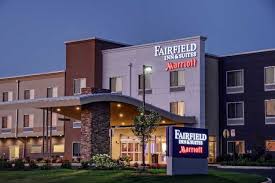 You may recall from an earlier blog article that I am putting together a $2,000,000 syndicate of equity investors to help a developer build a brand new Marriott Fairfield Inn in Roseburg, Oregon. Our investors are projected to earn a 25.4% annual simple interest return. Are you an accredited investor?







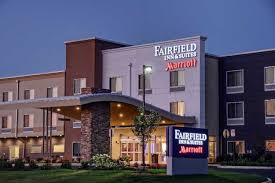 This month I am syndicating a fantastic deal. Please do not interpret my enthusiasm as any sort of guaranty of success or safety; however, let's face it. Some investment deals are better than others.






 The Commercial Loans Blog now has over 300 training articles on the subject of commercial real estate finance ("CREF"). I have covered so much material in my blog that I often have trouble thinking of new topics to write about regarding the commercial loan business. If my goal was to write down everything that I had learned in my 40 years in the commercial loan business before I died, well, I've largely succeeded.




 Are you building a small apartment building, office building, or flagged hotel? Is the bank demanding that you contribute an insane amount of equity to your deal? We may be able to help.