
 Repricing is defined as an increase in the interest rate of a commercial real estate loan after a term sheet has been agreed upon and after the third party reports have been completed. Conduits are the commercial lenders most likely to reprice a commercial loan.
Some commercial mortgage lenders insist on fixed rate loans. Other commercial lenders greatly prefer adjustable rate mortgages, when they can convince a borrower to take one.
Why would a commercial lender ever want to make a fixed rate loan? Some lenders - like life insurance companies and pension plans - need to know exactly what they will earn in interest income over the next ten years. The reason why is because life companies and pensions trusts need to make sure that they will have the dough to pay their death claims or retirement benefits. These big companies employ actuaries (maths geeks with sharp pencils), who can tell them pretty accurately how many people will die or retire in a given year.

Conduits are specialized commercial lenders (or special departments inside of money center banks, like JP Morgan Chase, the largest conduit originator) that originate large, plain-vanilla commercial real estate loans destined for securitization. By plain vanilla, I mean permanent loans on the four major food groups - multifamily, office, retail, and industrial. You will recall that a permanent loan is just a first mortgage on a commercial property with a term of at least five years and with at least some amortization (usually over 25 years).

You will also recall that a term sheet in commercial mortgage finance is a written expression of interest in making a loan and a good faith estimate of the eventual terms. Term sheets are also known as loan proposals, good faith letters, or conditional commitment letters.
Now term sheets are legally worthless. They are NOT commitment letters. They are NOT binding on the lender. That being said, once a commercial lender has issued a term sheet at a particular interest rate, the lender is almost always loathe to change the interest rate, as long as the commercial mortgage borrower has fully-cooperated and not dragged his heels. I think this level of honor among commercial real estate lenders is a credit to our industry.
Ocassionally even honest and well-intentioned commercial lenders have to reprice their commercial loans. Conduit lenders make their dough when they sell their fixed-rate permanent loans to a securitization trust at a premium. A premium is when an investor buys a fixed rate bond (or mortgage) for more than the face value.
Example: Morgan Stanley Capital Markets originates a $20 million conduit loan on a lifestyle center in Pittsburg - surprisingly one of the most successful cities in America. By the way, a lifestyle center is a new type of large shopping center where lazy Americans can drive right up to the door of the store they want to visit, rather than needing to hike 300 yards down the center of an enclosed mall. Assuming this new conduit loan is properly priced, Morgan Stanley might be able to sell this $20 million new commercial loan to the securitization trust for $21 million. That extra $1 million is the 5-point premium earned by Morgan Stanley for originating the loan. Be careful: I have no idea of the size of the premiums that conduits typically earn on deals. I am just trying to help you understand the concept of a premium.

Okay, we are finally getting to the point of today's training lesson. You will recall that we said that repricing is defined as an increase in the interest rate of a commercial real estate loan after a term sheet has been agreed upon and after the third party reports have been completed. We also said that conduits are the commercial lenders most likely to reprice a commercial loan.
Recently the CMBS industry (the conduit loan industry) has been in turmoil. When China suddenly devalued the yuan by 5% about six months ago, the credit markets got spooked. Stock and bond markets worldwide began to make wild swings. Volatility became the new buzz word in the field of finance.
This put the conduit industry between a rock and a hard place. Remember, conduit loans are fixed rate loans because that's what the CMBS bond buyers (life insurance companies and pension plans) want. But what happens to a small conduit when it prices a new loan at 4.4%, a rate that would ordinarilly produce a 5-point premium, only to discover at the closing 90 days later that the the loan needs to be written at 4.90%?! That 5-point anticipated premium disappears! To make matters worse, the conduit might even have to discount the loan (sell it at a loss). Yikes!
Well, do you remember when I said that that terms sheets are NOT binding on the lender? You guessed it. That 4.4% conduit loan is going to be repriced to 4.90%.
Right now there is a lot of repricing going on. I should go into the business of selling Tums to conduit owners. I would sell a lot of them right now.
Do you need a commercial loan right now?

Even if you don't have a pressing commercial loan need right this moment, you still should go onto C-Loans.com and register. That's a fancy term for just filling in your name and address. As soon as you do, I will send you a free $199 commercial mortgage underwriting manual.

Keep your eyes out for the business card or the contact information of a banker making commercial real estate loans. We'll trade you the contents of that one business card for a free directory of 2,000 commercial real estate lenders.

Be sure to subscribe to this blog to get free training in commercial real estate finance. These blog articles are written with great love and care because they are my legacy to my two wonderful sons. Congestive heart failure almost got me twice this year, so I am scrambling to finish the training of George IV and Tom. By subscribing you'll be getting the same training as my sons.

You can also forward this blog article to a friend.

 Location is far-far more important to commercial real estate lenders than home loan lenders.

 During the real estate crash of 2008, there were a ton of broken condo's in Florida. Developers would start new residential condo projects in 2007, and by mid-2008, the residential real estate market had completely collapsed. The developer would build a 100-unit condo project, but he would only sell 35 of them. The rest of them, usually several years later, would eventually be rented out as apartments. Voila! You have a





 Every year commercial mortgage loan demand plunges by 75% in April. Our office phones stop ringing, and the place feels like a morgue. This happens every year, without fail.

 There are 5,309 commercial banks in the United States. There are over 35 conduits. There are 7,165 credit unions. There are 830 life insurance companies. Most of these institutions make commercial real estate loans.


 Once upon a time Bill Badluck borrowed $2 million from a non-prime commercial lender on his office building. His lender was not a commercial bank, a credit union, or even a regular conduit making CMBS loans. Instead his lender was one of these new commercial lenders making non-prime commercial loans, the same kind of sub-prime commercial loans that Bayview Financial used to securitize before the Great Recession.


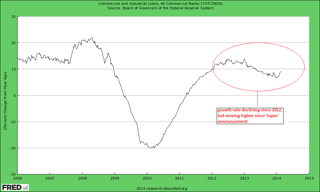 There are two different ways to analyze commercial loan production - the

 Suppose you are trying to refinance your client's balloon payment on his office building, but you run out of time. At the advice of his attorney, he files a Chapter 11 Bankruptcy. The moment he does this, the foreclosing lender becomes subject to an